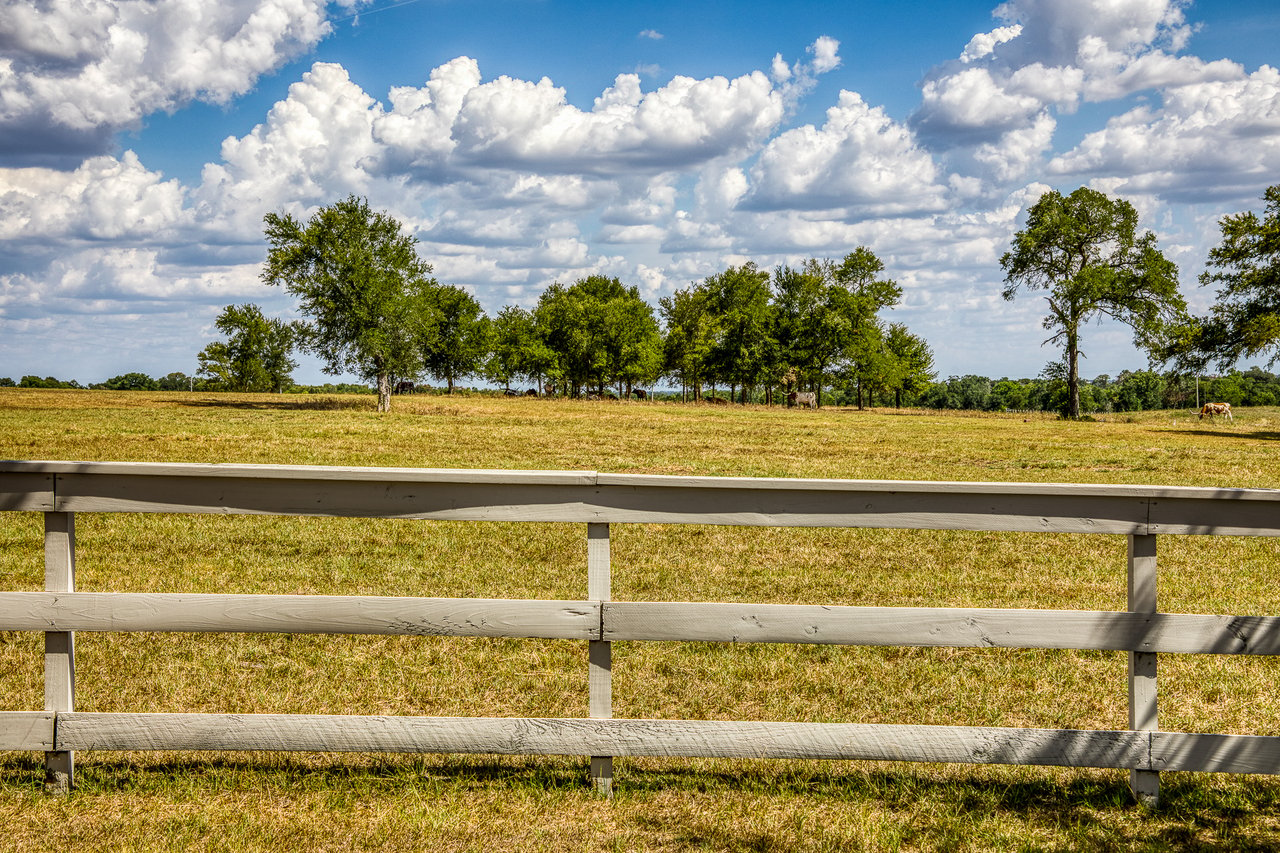
On a farm or ranch, the land usually gets all the attention. The buildings on it deserve just as much during your option period. A 1950s farmhouse, a pole barn, a set of working pens, a stock pond, and a shop with power can add a lot of value to a tract around Brenham, Chappell Hill, Burton, or Independence. They can also hide the most expensive surprises in the deal.
Most home inspectors are great at the house. Fewer are set up to look hard at a barn roof, a pond dam, or a set of pens. Fewer still are able to inspect your water well, septic, and look for pests. This guide walks through what to look at, who to bring out, and what to ask the seller, so you know what you're buying before your inspection window closes.
This is my take from experience of how these inspections usually go on rural property. Every tract is different, I'm not an attorney or an engineer, and if you have questions about a specific property, reach out and we'll point you to the right people.
The farmhouse
Start with a full home inspection. Hire a licensed inspector who works on rural homes, not just subdivisions. Older farmhouses often have a mix of original and added-on rooms, and the seams between them are where problems show up.
Foundation and framing. Pier-and-beam homes are common out here. Ask the inspector to get under the house and look at the piers, the beams, and any signs of rot or termites. Look for doors that stick and floors that slope.
Electrical. Older homes can still have original wiring, undersized service, or a panel that's been added to over the years. If the barn or shop runs off the same service, have the inspector look at that too. One thing to look out for in this area is a Federal Pacific panel; those should be replaced.
Roof and gutters. Metal roofs last a long time but can still leak at screws and seams. Ask how old the roof is and whether it's been through a hail claim.
Pests. A wood-destroying insect inspection is worth it on any older rural home.
Barns, shops, and outbuildings
Is the structure sound? Look at the posts where they meet the ground, the trusses, and the roof. Rust, rot, and leaning posts are easy to spot if you walk it slowly.
What's the power situation? Ask whether the barn has its own meter or runs off the house. Look at how the wire gets there. Extension cords and buried wire with no conduit are worth a closer look by an electrician.
Water to the barn. Find out where the water comes from and whether the lines freeze. See for yourself if the water actually turns on and works.
Is it well-built? On rural land a lot of outbuildings were built by the owner, and there are no permits required in most rural areas. That's not a deal breaker. Just know what you're getting, especially if you plan to finish one out as living space or a guest house later.
What conveys? Ask in writing which items stay: panels, gates, feeders, the hay ring, the tractor, the welder in the shop. Personal property is where a lot of misunderstandings happen at the walk-through. If you negotiate for equipment, list serial numbers when you can, add photos, and any other details.
Pens, fences, and working facilities
If you plan to run cattle, goats, or horses, the working facilities matter as much as the barn.
Walk the pens. Check the panels, gates, and posts. Look at the chute and the alley, and whether the setup makes sense for the animals you plan to run.
Ask about the fence history. What's been rebuilt, what's original, and where cattle have gotten out before. The seller and the neighbors usually know.
Look at the gates. Are they wide enough for your trailer and equipment? Do they swing and latch?
Our post on road access, easements, and fences covers where fence lines sit compared to the real property lines.
Ponds and stock tanks
A good pond is one of the best features a Washington County tract can have. A leaking or failing dam is one of the most expensive things to fix.
Walk the dam. Look for trees growing on it, erosion, animal burrows, soft spots, and wet areas on the back side.
Check the spillway. Ask where the water goes in a big rain and whether it has ever topped the dam.
Ask how it holds water. Does it stay full through a dry summer, or does it drop fast? Has it been dredged or rebuilt?
Bring the right person. If the pond is a big part of why you want the place, have someone who builds or repairs ponds look at the dam before you're committed.
Septic, wells, and the rest of the systems
The house and barn sit on top of the well and septic, so plan all of these inspections together. Our post on wells, septic, and floodplain covers what to test and who to call.
Ask the seller the right questions
How old are the major systems? Roof, HVAC, water heater, well pump, septic.
What's been repaired or replaced? Ask for receipts if they have them.
Any past insurance claims? Hail, wind, fire, and water claims are worth knowing about.
What do you wish you'd known when you bought it? This one question gets better answers than almost any other.
Fit it into your inspection window
On a rural property you may need a home inspector, a pest inspector, a septic inspector, a well company, and sometimes an electrician or pond contractor. That takes time to schedule, so start the day you go under contract.
Day 1 to 2: Book the home and pest inspection, and call the septic and well people. Ask the seller for any repair records and a list of what conveys.
Midway: Walk the barn, pens, and pond yourself with your agent. Decide whether you need a specialist on anything. This can usually be done during the actual inspection.
Before the window closes: Review every report with your agent. Decide whether to move forward, ask for repairs or a price change, or walk away.
The improvements are one part of the file. Title, water, ag valuation, access, and financing all need attention in the same window. Our Washington County farm and ranch buyer guide has the full checklist, our post on avoiding surprises at the title company covers the title side, and the financing guide covers land loans.
For the longer buyer checklist, request the free Texas farm and ranch buyer's guide.
Next step
If you're looking at acreage around Brenham, Chappell Hill, or anywhere in Washington County, reach out to Legend Texas Properties. Tell us your acreage range, what you need from the improvements (a livable home, a working barn, pens, a good pond), and your timing. We'll help you narrow the list and know what to check on the places worth a second look.
Legend Texas Properties 7701 Highway 290 E, Chappell Hill, TX 77426 (979) 830-1180 · [email protected]
This is not legal, engineering, or inspection advice. Rules and conditions change, and every tract is unique. Confirm the condition of any property with licensed inspectors and the right professionals for that property.